
Can Crypto Stage A Comeback?

While many investment themes continue to advance strongly, sentiment towards crypto remains fragile after the latest cyclical correction forced many investors out of the market as volatility increased.
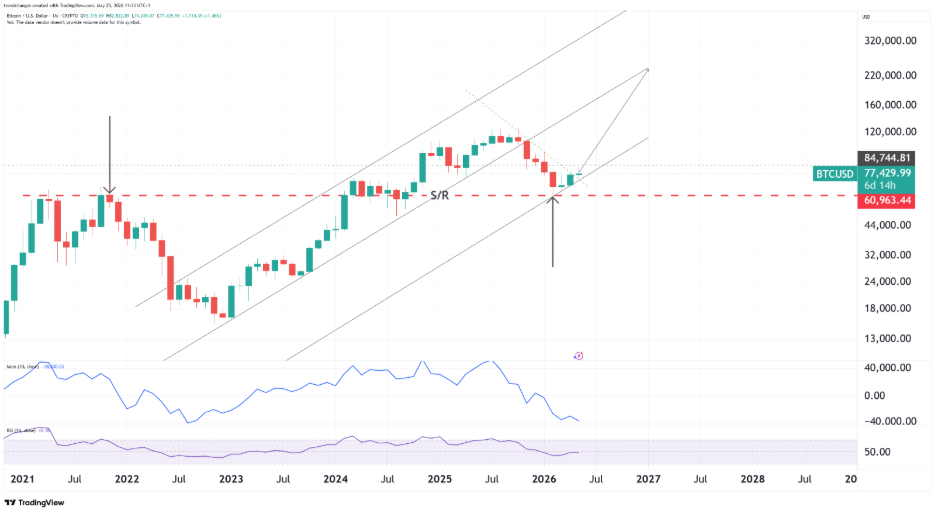
Looking at the BTC chart, we can clearly see the broader uptrend that began from the Q4 2022 lows into the intermediate high reached in October last year. Throughout much of this advance, price action remained well contained within a rising trend channel before eventually breaking lower during the recent corrective phase.
After a channel breakdown, markets will often move toward the lower boundary of the next equidistant channel. That is exactly what occurred here. What makes the current area particularly interesting is that it also aligns with the prior cycle high; a level markets frequently revisit to test former resistance as new support.
BTC
Looking closer at the weekly structure, we can see a clear resistance zone formed during the decline into the November lows which has, so far, acted as a barrier to further advances.
BTC
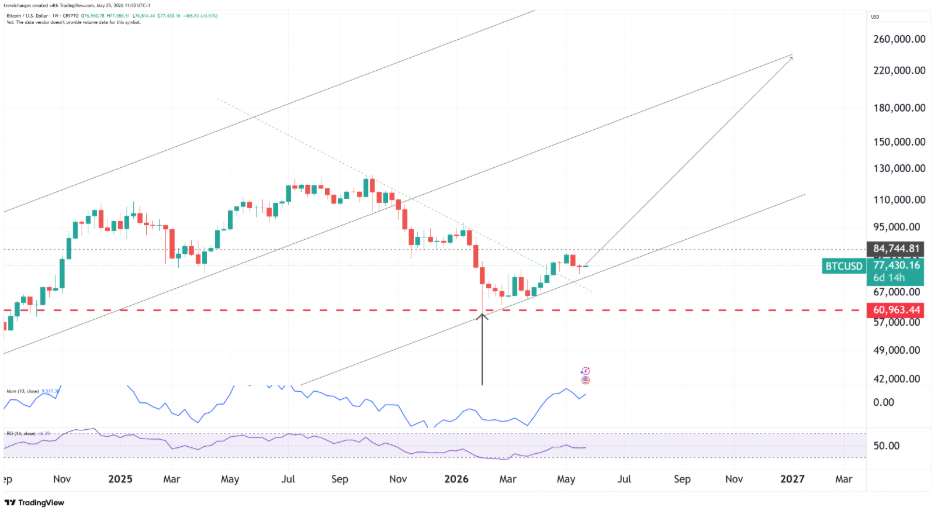
The latest rejection has led many to forecast new lows and the continuation of the bearish trend from last summer. However, that does not necessarily need to be the ultimate outcome. In many cases, markets initially reject former support levels before eventually reclaiming them. With BTC now attempting to build structure above the lower trendline and overhead resistance beginning to weaken, there are several reasons to remain constructive.
For now, the 85,000 level remains an important psychological hurdle. Once convincingly reclaimed, it would become increasingly difficult to deny the possibility that the broader advance is resuming.
Fed net liquidity has also continued trending higher since last summer despite temporary distortions caused by Treasury General Account (TGA) fluctuations and the government shutdown. Financial conditions have gradually improved beneath the surface, and liquidity cycles often feed through into risk assets with a lag.
Importantly, this corrective fluctuation did not only impact crypto markets. Many other highly speculative long-duration themes experienced similar behavior during the same period.
One of those themes was quantum computing.
RGTI
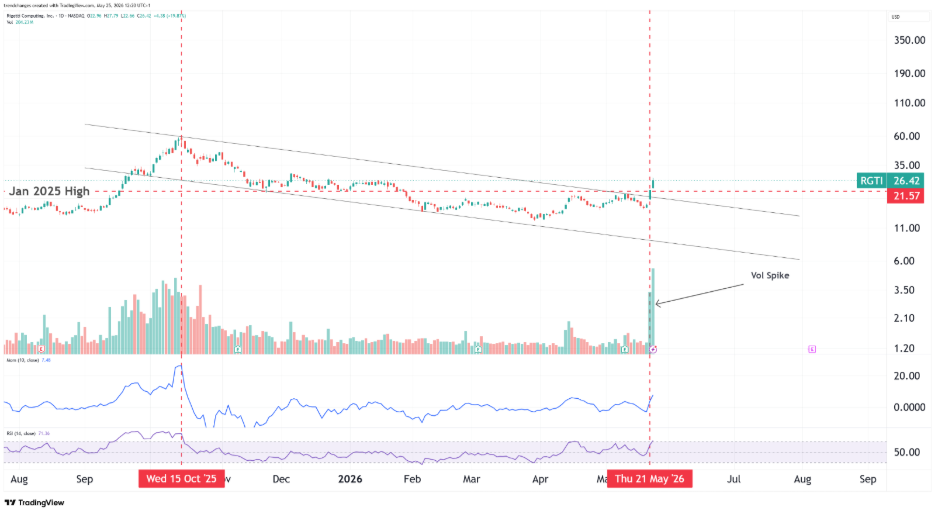
When comparing RGTI alongside BTC, we can see that both assets peaked around October 2025 before entering prolonged corrective declines almost simultaneously. This strongly suggests the move was driven less by company-specific developments and more by broader shifts in liquidity and speculative sentiment.
BTC
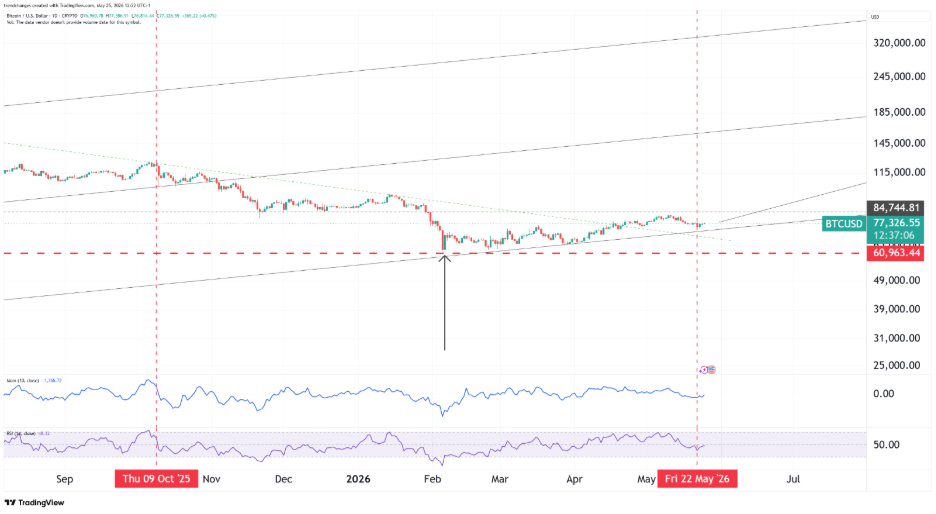
What now becomes interesting is that quantum stocks have recently begun breaking higher again, potentially signaling that speculative participation is starting to broaden once more.
Could this breakout in quantum equities be acting as a leading indicator for a more constructive backdrop in crypto markets?
I am increasingly leaning towards that interpretation.
While markets remain heavily focused on short-term volatility and recession fears, the broader macro backdrop continues to improve beneath the surface. Liquidity conditions are stabilizing, manufacturing activity has begun recovering, and infrastructure spending tied to artificial intelligence, industrial automation, defense technology, energy systems, robotics, and advanced computing continues to accelerate globally.
Markets now appear to be witnessing a broadening of speculative participation across themes including A.I. infrastructure, future energy, photonics, space, defense technology, robotics, and industrial automation.
If this process continues, today’s fears surrounding economic slowdown may gradually give way to optimism surrounding a new high-tech industrial expansion cycle. In that environment, the “end of cycle” narrative currently dominating sentiment may ultimately prove premature.
Note: Some sections of this article were developed with the assistance of A.I. editing and drafting tools. All final analysis, trade ideas, and opinions are my own.
Not investment advice. Readers are strongly encouraged to perform their own due diligence and, where appropriate, seek guidance from a qualified financial advisor before making investment decisions.
J.B.